Focus: Economic Perspective | 15MWp Hybrid Solar Farm, Sabon Gari Market, Kano | Commissioned 6 June 2023 | US$21,626,632.83 | ICC Offshore SAL for REA/NEP
Reliable electricity is one of the most valuable inputs a business can have. In one of northern Nigeria's busiest markets — Sabon Gari Market in Kano — it is now being generated on site.
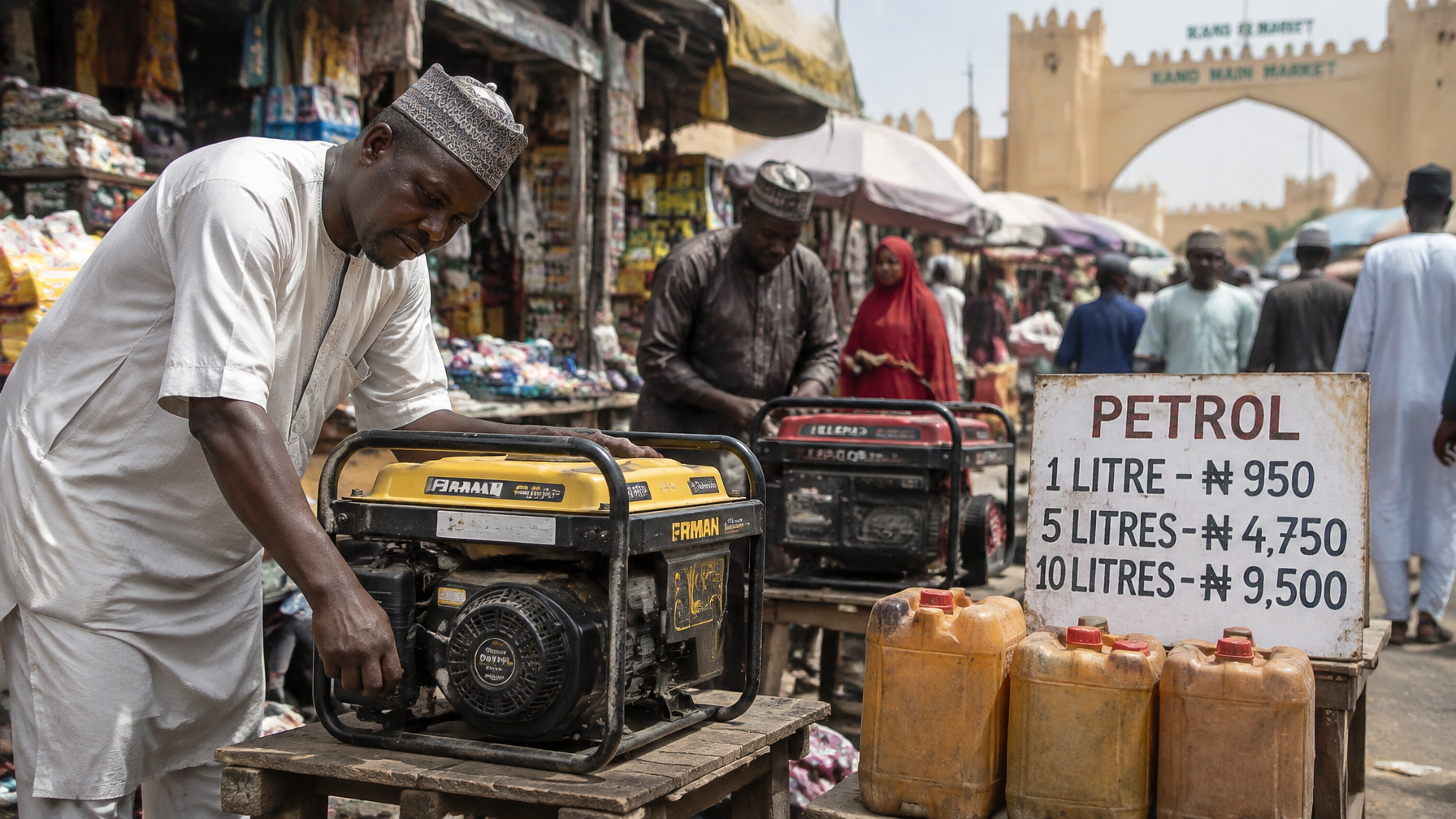
For years, traders shared a costly problem: keeping lights, fans, freezers, phone chargers and POS terminals running meant buying fuel for small generators, paying for repairs, and absorbing losses whenever power failed.
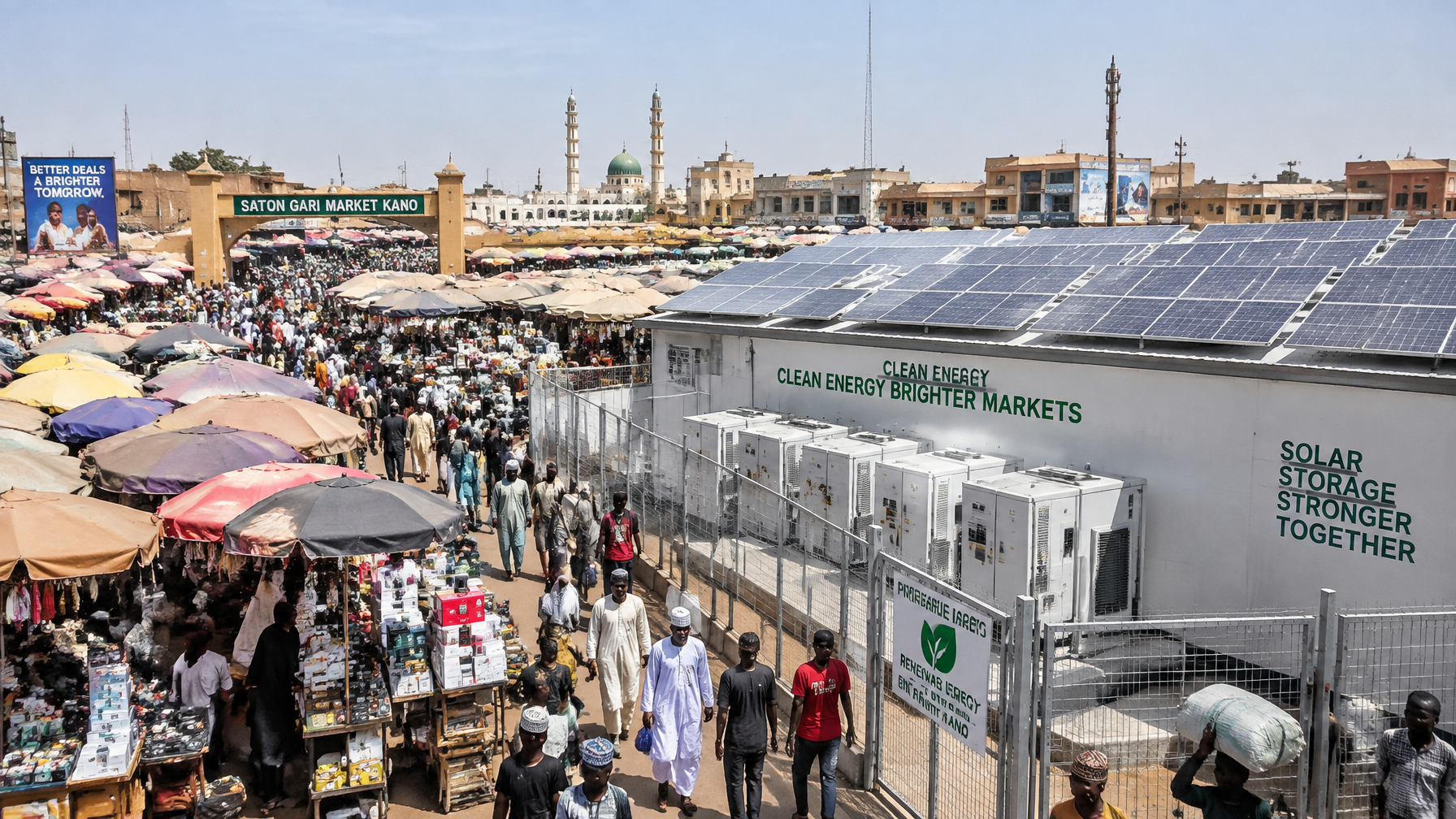
That equation changed on 6 June 2023, when a 15MWp hybrid solar farm built to electrify the market entered commercial operation — delivered for the Rural Electrification Agency under the Nigeria Electrification Project, designed, supplied, installed, tested and commissioned by International Consolidated Contractors Offshore SAL for $21,626,632.83.
What the Investment Buys: A Market's Own Utility
Dividing $21.6M by 15MWp gives ~$1.44M/MWp, but that understates what was delivered — a complete, self-contained power system:
- 15MWp of solar panels
- 15MW/15MWh lithium-ion battery with full energy management
- Fourteen synchronized 1,100 kVA diesel generators for backup
- Streetlights, cabling and distribution network
- Advanced metering infrastructure (AMI) + SCADA control system
- 15-year operation and maintenance commitment including spare parts
In effect, the market received its own utility.
The Cost of Doing Without: Why Timing Mattered
Self-generation is one of the most expensive ways to obtain electricity — inefficient generators, constant maintenance and exposure to every fuel price swing.
The solar farm entered service barely a week after Nigeria announced the end of the petrol subsidy in late May 2023, which caused pump prices to more than double overnight. For generator-dependent businesses, operating costs jumped at a stroke. A power supply anchored in sunlight and stored energy offers something scarce in Nigerian commerce: predictability.
From Savings to Growth: What Reliable Power Changes
Reliable electricity does more than cut costs — it changes what a business can do:
- Refrigerate perishable goods instead of discounting at day's end
- Keep electronic payment terminals online, reducing cash risk
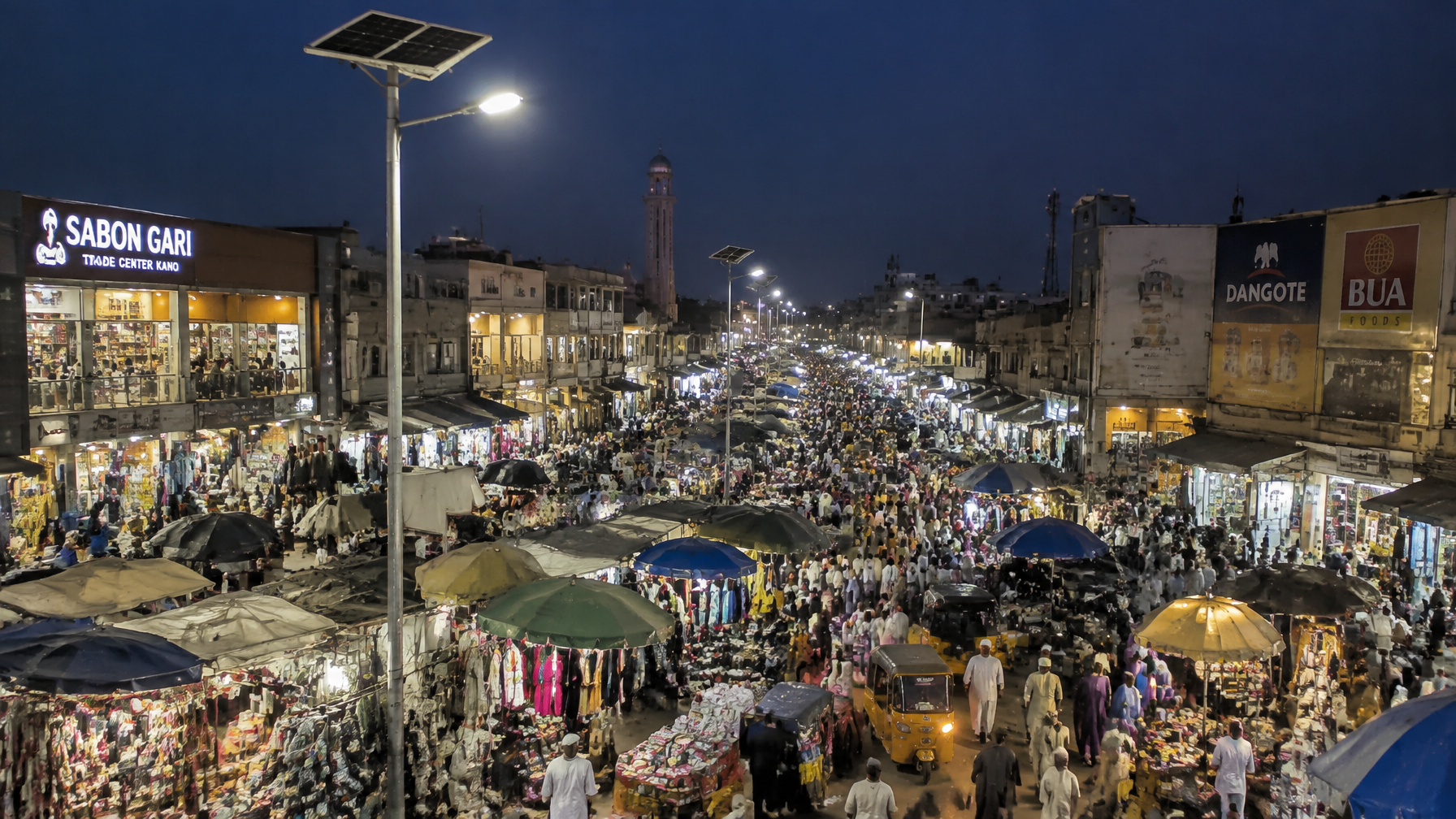
- Extend trading hours safely into evening via rehabilitated streetlights — adding sales time without fuel bills
- Power tools, sewing machines and electronics without interruption
Advanced metering adds economic discipline — when consumption is measured accurately, customers pay for what they use, and revenue can be collected to keep the system running. Critical in Nigeria, where many projects faded for lack of maintenance funds.
Ripple Effects: Beyond the Market's Boundaries
A 15-year O&M contract implies long-term technical jobs and steady demand for local services. Suppliers, transporters and customers all gain from a market that functions more smoothly. A successful example makes it easier to attract investment for similar projects elsewhere.
The Questions That Remain
The long-term verdict depends on details a commissioning certificate cannot capture: whether tariffs remain affordable for small traders, whether revenue collection proves sustainable, and whether energy savings translate into lower prices, higher incomes and new jobs. But the foundation is in place — a market that once ran on thousands of small, expensive engines now has a modern power plant working for it. In an economy where energy costs can decide whether a business survives, that is a significant shift.
Sabon Gari Hybrid System At-A-Glance
| Item | Details |
|---|---|
| Location | Sabon Gari Market, Kano, Kano State |
| Capacity | 15MWp solar + 15MW/15MWh battery + 14x 1,100 kVA synchronized diesel |
| Commissioned | 6 June 2023 - REA / NEP (World Bank & AfDB support) |
| Contract Value | US$21,626,632.83 - ICC Offshore SAL |
| Peak Demand Served | 7,500kW (solar oversized 2:1 to charge batteries + meet demand) |
| Includes | Streetlights, distribution network, AMI, SCADA, 15-year O&M with spares |
Frequently Asked Questions
Q: Why was the Sabon Gari project needed?
Traders relied on costly self-generation — small petrol/diesel generators are inefficient, fuel-price sensitive and unreliable for a major commercial hub.
Q: What makes it hybrid?
Solar first, stored solar (15MWh battery) second, synchronized diesel only when needed — managed by an EMS with SCADA monitoring.
Q: Will tariffs be affordable?
That is the key test. Advanced metering enables accurate billing, but long-term affordability for small traders and sustainable revenue collection will determine success.
Based on REA commissioning of Sabon Gari Market 15MWp hybrid solar farm 6 June 2023 under Nigeria Electrification Project, executed by International Consolidated Contractors Offshore SAL. For latest status consult rea.gov.ng.


No comments:
Post a Comment