Focus: Economic Perspective | 35MWp Green Economic Zone, Maraban Jos | REA Award 10 May 2021 | US$46,219,403.17 | NEP / World Bank & AfDB
On 10 May 2021, Nigeria's Rural Electrification Agency issued a Notification of Award for one of the larger single contracts under its Nigeria Electrification Project: the 35MWp solarization of the 330/33kV substation at the Green Economic Zone, Maraban Jos, Kaduna State — awarded to International Consolidated Contractors Offshore SAL (Beirut) for US$46,219,403.17.
Behind the headline figure sits a straightforward economic question: what does a country gain by spending tens of millions of dollars to put solar generation at the heart of an industrial zone?
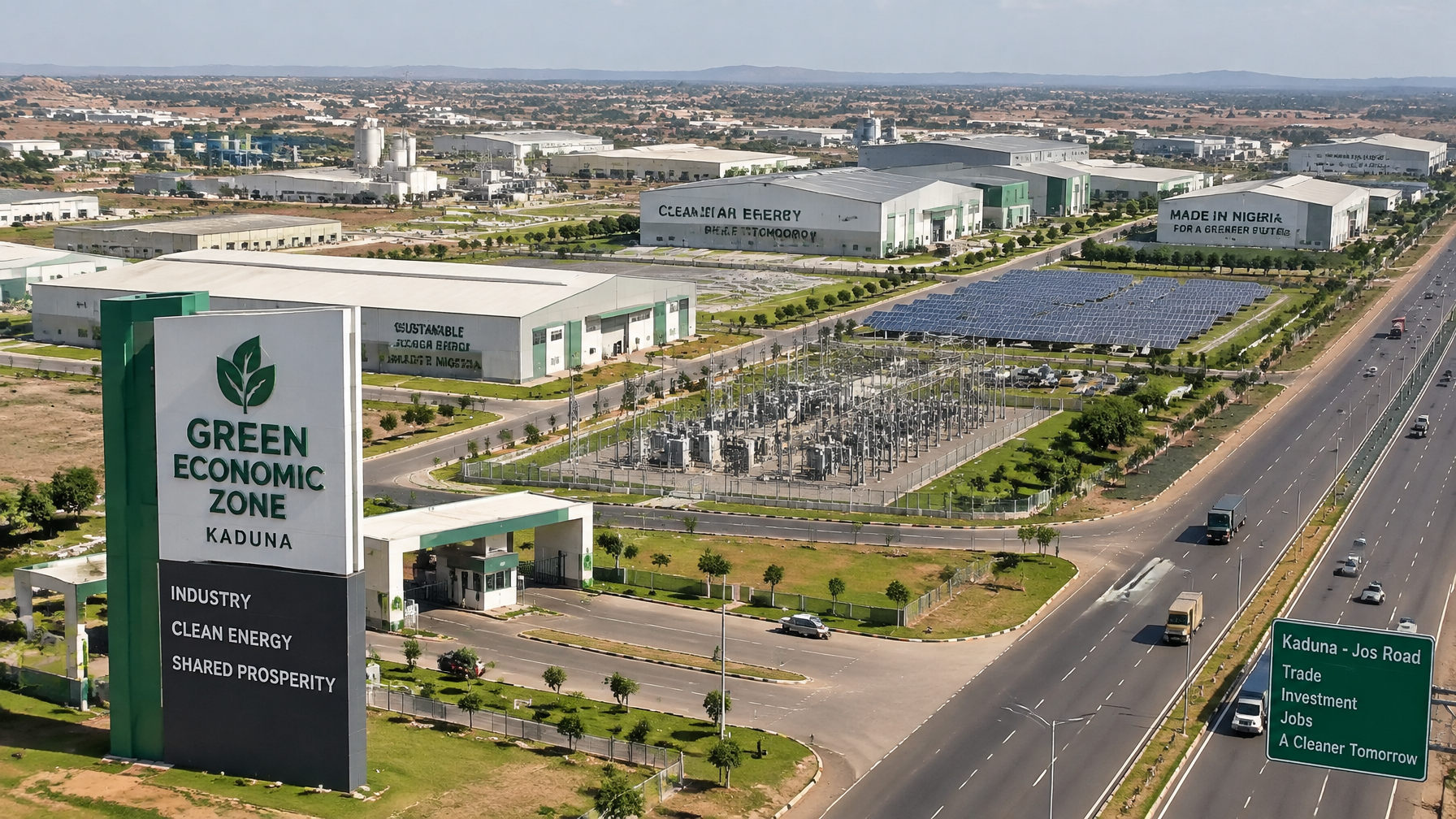
The Cost of Unreliable Power
Nigeria's electricity problem is, first and foremost, an economic problem. The World Bank estimates about 85 million Nigerians lack access to grid electricity — the largest access deficit globally — and that unreliable power costs the economy a meaningful share of GDP every year. For businesses, the deficit shows up as diesel generators, fuel queues, spoiled inventory, idle machines and higher prices passed to consumers.
Manufacturers feel this most acutely. A factory that must generate its own power carries a cost burden competitors in stable-grid countries do not. Industrial zones that can promise dependable electricity therefore have a real competitive edge.
Why an Economic Zone?
The Green Economic Zone sits along the Kaduna–Jos road near Maraban Jos, in Igabi LGA. It is a public–private partnership between Kaduna State Government and KK Kingdom Nigeria Limited, licensed by the Nigeria Export Processing Zones Authority as a free trade zone in 2022. Its developers describe it as a hub for agro-processing, light manufacturing, logistics and trade, with close links to the Kaduna Inland Dry Port, airport and Abuja–Kaduna railway.
Placing a large solar installation at the substation serving such a zone concentrates investment where electricity demand is expected to grow fastest — rather than spreading generation thinly.
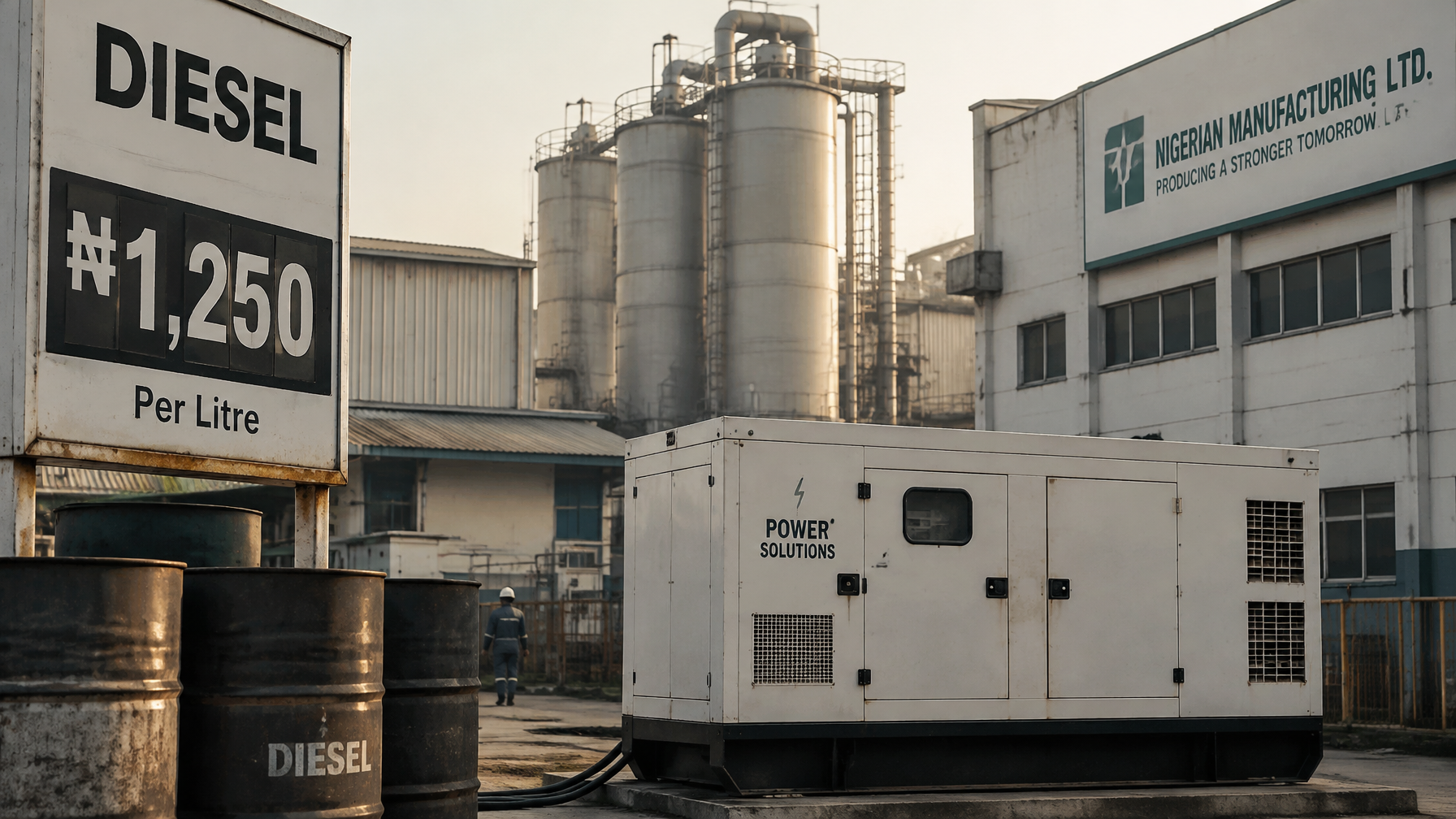
Reading the Numbers: $1.32/Wp and the Naira Question
Dividing the contract sum by capacity gives roughly US$1.32 per watt-peak. That should be read with care: the scope covers solarization of a high-voltage substation, with integration, protection and grid-interface works beyond panels — not directly comparable to a simple ground-mounted farm.
The contract is denominated in US dollars. Since 2023, the naira has lost a large part of its value following foreign exchange reforms. For any dollar-priced infrastructure, this changes the naira-equivalent cost significantly — important for local budget debate even where financing is in foreign currency.
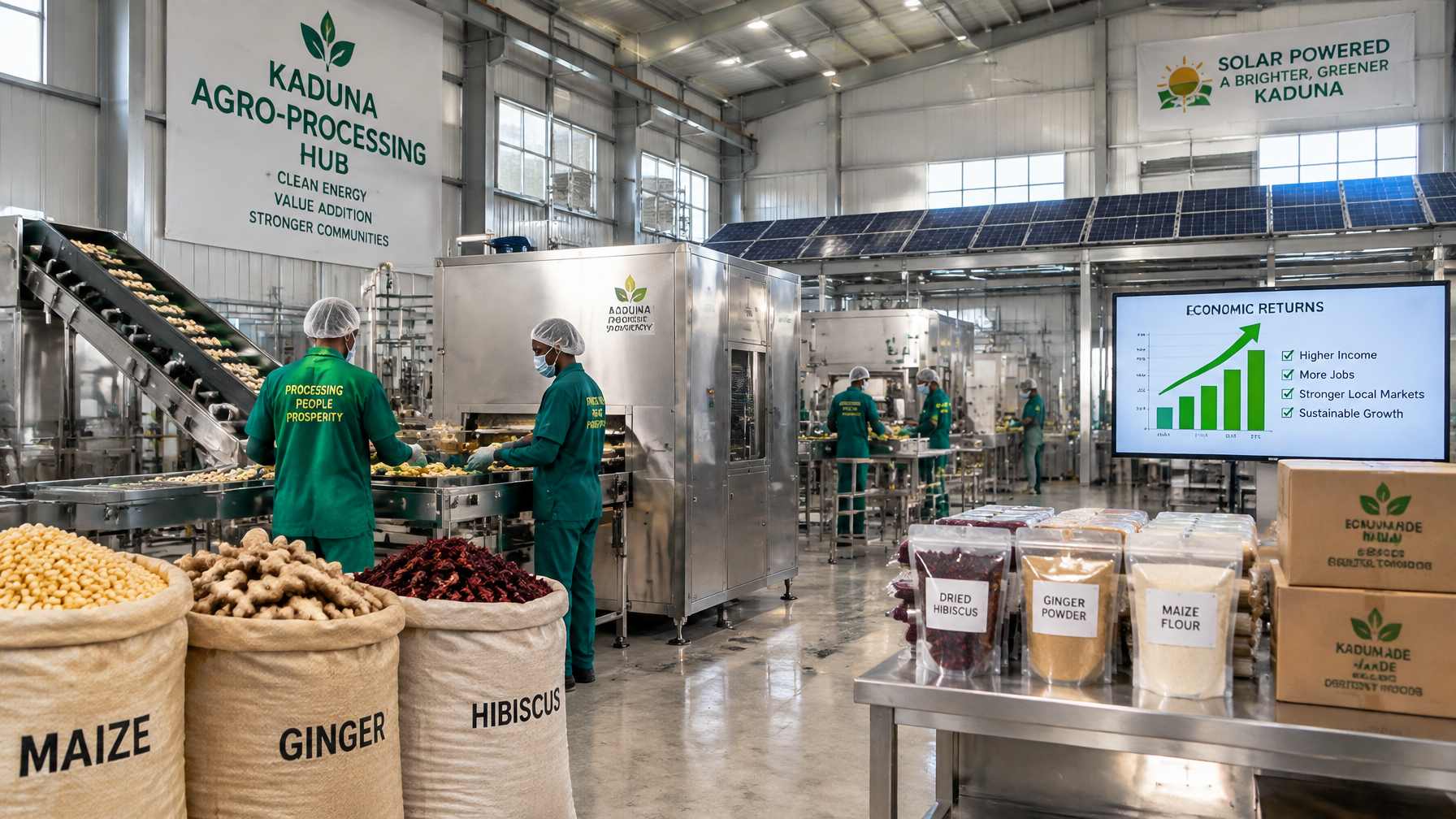
Potential Economic Returns
- Lower operating costs: Reliable daytime solar reduces diesel/gas bills for factories
- Agro-processing value: Keeping more value in Kaduna region rather than exporting raw commodities
- Jobs & services: Construction and 20-25 year operation create local demand
- No fuel bill: Once built, solar shields users from volatile diesel/gas prices
The Caveats
None of these benefits is automatic. Returns depend on the zone attracting tenants, the plant being maintained properly over its 20–25 year life, and electricity being priced and distributed so businesses can actually use it. Solar also produces only in daylight — round-the-clock supply depends on storage, grid or other sources.
The Bottom Line: An Infrastructure Bet
The 35MWp GEZ award is best understood as an infrastructure bet: that dependable, cleaner power at an industrial hub can unlock private investment that would otherwise go elsewhere. Whether that bet pays off will be measured not by contract size, but by the factories, jobs and exports the zone eventually hosts.
Project Economics At-A-Glance
| Item | Details |
|---|---|
| Project | 35MWp solarization of 330/33kV substation, Green Economic Zone, Maraban Jos, Kaduna |
| Contract Date/Value | 10 May 2021 / US$46,219,403.17 (incl. indirect taxes) |
| Contract No | REA-NEP/C/GO/RFP/98/15B - NEP supported by World Bank & AfDB |
| Metric | ~US$1.32/Wp (indicative, includes substation integration) |
| Zone Status | Licensed as Free Trade Zone 2022 - agro-processing, light manufacturing, logistics |
Frequently Asked Questions
Q: Is $46.2M expensive for 35MWp?
~$1.32/Wp includes high-voltage substation solarization, not just panels — not directly comparable to a simple solar farm.
Q: What economic return should we watch?
Factory tenants attracted, jobs created, agro-processing value retained in Kaduna, and reliable pricing over 20-25 years.
Q: How does naira devaluation affect the cost?
Contract is in dollars; naira depreciation raises local-currency equivalent sharply since 2023 reforms, even if financing is foreign.
Based on REA Notification of Award Ref: REA-NEP/C/EEI/25/18, Contract No. REA-NEP/C/GO/RFP/98/15B, dated 10 May 2021 and public sources. Consult rea.gov.ng for latest status. Sources: REA 10 May 2021; World Bank Igniting Economic Growth by Reforming Nigeria's Power Sector; gez.com.ng; BusinessDay Feb 2024.



No comments:
Post a Comment